Seated Forward Fold A·D · Paschimottanasana A·D
Paschimottanasana A·D · 파스치모타나사나 · 앉은 전굴
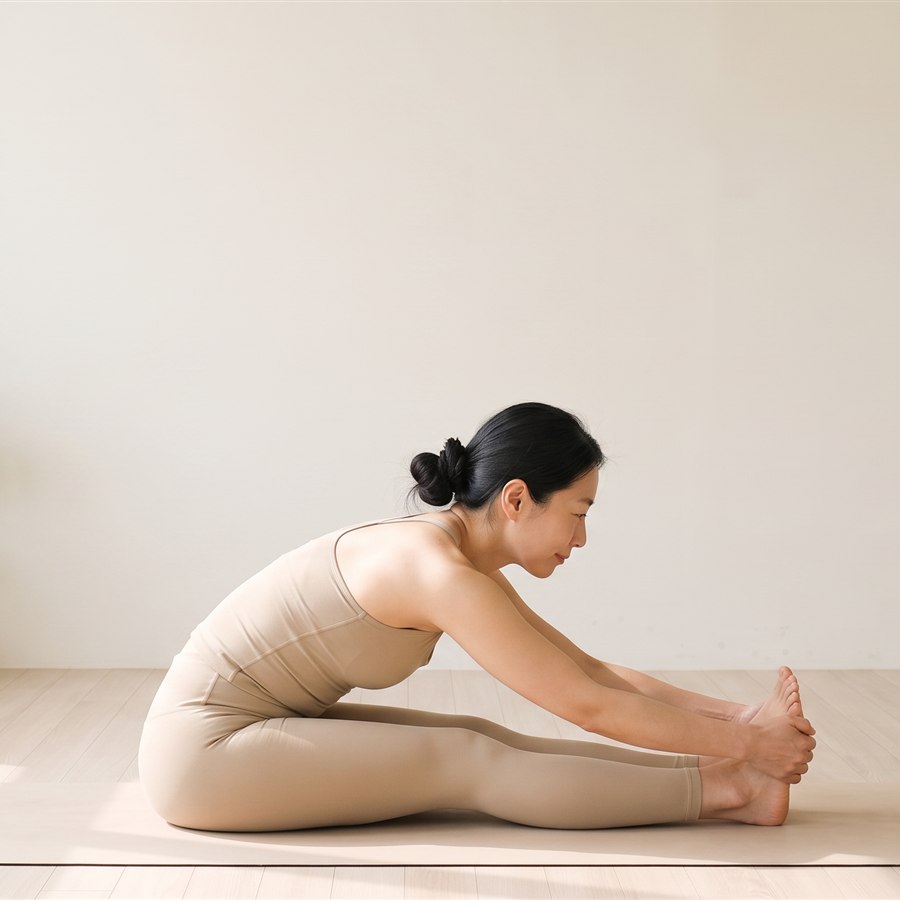
Primary Series · Yoga Chikitsa (Yoga Therapy) — Seated Sequence
Breath: 5×2 · Drishti (gaze): toes
From staff pose, hinge at the hips to catch the feet; inhale to lengthen, exhale to lay belly, chest, then head along the legs. Two grips (A and D) are each held in turn while the whole back line, calves to spine, releases into the long breath — the heart of Primary's forward folds.
Alignment
- Hands — A: two fingers hook the big toes · D: one hand clasps the opposite wrist around the soles
- Feet — together and flexed, soles upright like a wall
- Knees — straight without locking, inner thighs hugging toward each other
- Gaze — the toes, the neck a relaxed continuation of the spine
Entering the pose
- From staff pose, inhale the arms up
- Exhale, hinge from the hips and hold the feet
- Inhale lengthen, exhale fold belly, chest, head
Common mistakes
- Rounding only the upper back
- Yanking on the feet with the shoulders
Modifications & props
- When the feet are out of reach, loop a strap around the soles — to hang from, not to haul on.
- Soften the knees until the belly meets the thighs first; straightening the legs afterwards is the breath's job.
- If the fold starts from a tucked pelvis, sit up on a blanket and draw the sit bones back — the hinge drops from the waist to the hips.
Benefits
- Releases the entire back chain, calves to back
- Abdominal compression stimulates digestion
- A long-held fold deeply quiets the nervous system
Role in the sequence
The signature pose of the seated sequence. True to its name — stretching the west, the body's back side — it completes on the floor what the standing folds began, and it is the prototype for every fold variation to come: half-lotus, one-leg-folded, head-to-knee. Primary series is nicknamed yoga chikitsa, yoga therapy, and no pose displays that therapeutic character better.
Practice notes
Paschima — the west — points to the body's back side, from a tradition of practicing while facing the rising sun in the east. The pose appears by name in the classical hatha texts, and Ashtanga passes through two grips for five breaths each: A hooking the toes, D clasping the wrist beyond the soles. As the grip deepens, the arms become a lever and the same fold turns into a different pose.
In the vinyasa you jump through to sitting, take one breath of Dandasana, then inhale to reach and catch the feet with the head lifted and the back concave, and exhale to fold. This inhale-lengthen, exhale-fold grammar is common to every fold still to come, so engraving it here makes the rest of the series easier. Through the five breaths, the pulling force should come from the lats behind the back, never from hunched shoulders.
The turning point, some months in, is the belly reaching the thighs. Before that moment this is a hamstring pose; after it, a breathing pose — when the breath starts spreading wide into the back body over the folded belly, you understand physically why this is called Primary's sedative. The healthy signal is stretch near the sitting bones, not behind the knees.
Bend the knees and bring belly to thighs first.
Written by Choi Seongjin — 20 years of Ashtanga practice, currently teaching three classes a week. Last updated: .
This guide is for general information and is not medical advice. If you are pregnant, injured, or have a medical condition, consult a qualified teacher or physician before practising. Disclaimer & Legal Notice
Other poses in this sequence
Ashtanga Shala — Ashtanga Vinyasa Yoga guide · Blog
Policies