Half-Bound Lotus Forward Fold · Ardha Baddha Padma Paschimottanasana
Ardha Baddha Padma Paschimottanasana · 아르다 받다 파드마 파스치모타나사나
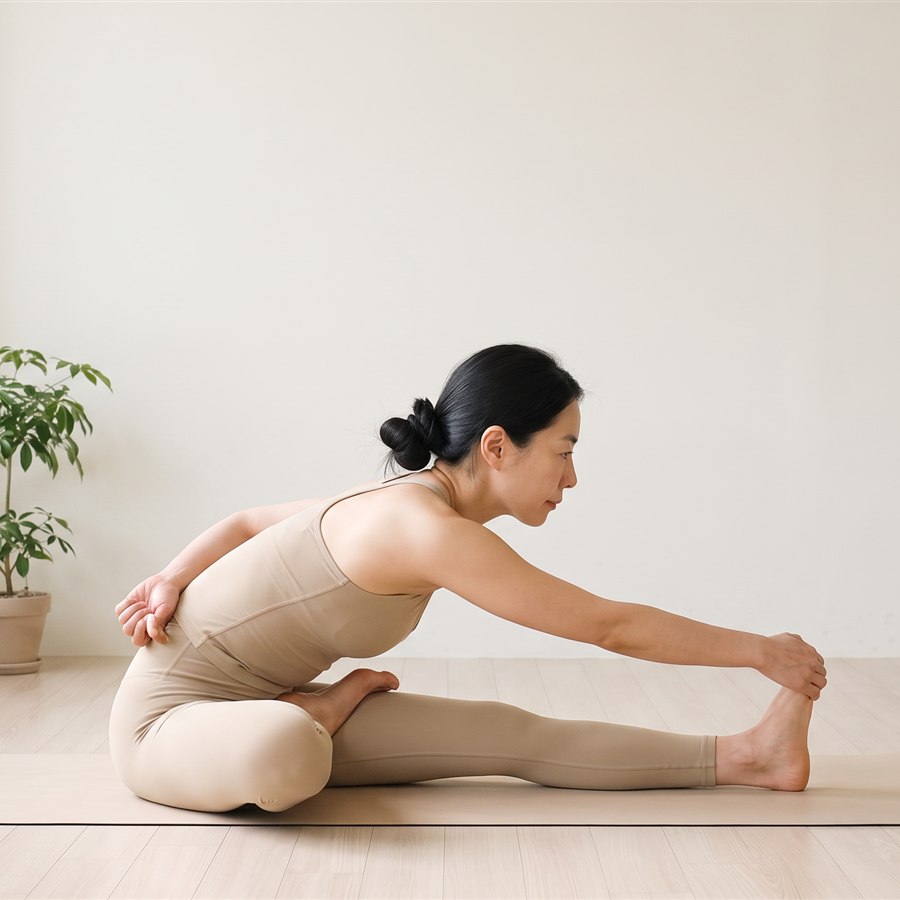
Primary Series · Yoga Chikitsa (Yoga Therapy) — Seated Sequence
Breath: 5 · Drishti (gaze): toes
Draw one foot into half lotus so the heel presses the low belly, bind that foot behind the back, and fold over the extended leg. Each exhale lets the heel massage the organs while the bound shoulder opens across its front.
Alignment
- Hands — the behind-the-back hand binds the lotus foot; the front hand wraps the extended foot
- Feet — the lotus instep rides near the lower belly; the long leg's foot stays flexed
- Knees — the lotus knee settles down and inward; the extended leg stays straight
- Gaze — the toes, folding until the lotus heel presses gently into the belly
Entering the pose
- Right foot to half lotus
- Bind the foot behind the back
- Exhale, fold over the left leg
Common mistakes
- Ignoring knee pain (release immediately)
- Chasing the bind with a twisted torso
Modifications & props
- If the bind is far, cradle the lotus foot and fold with the free arm only — or mimic the bind with a strap to the foot.
- A floating lotus knee gets a blanket beneath it, ending its vigil in mid-air.
- At the first signal from the knee, release the foot under the opposite thigh into a Janu Sirsasana shape.
Benefits
- Half lotus opens the tissues of hip and knee deeply
- The heel presses the belly, massaging the organs
- The bind widens the shoulder's range
Role in the sequence
The half-bound lotus fold from the standing section returns, now seated. With balance off the bill, the fold deepens greatly, and the pose's distinctive sensation appears — the lotus heel pressing steadily into the lower belly, traditionally described as stimulating digestion. The seated sequence's asymmetric poses begin in earnest here, each side visited once with equal breaths.
Practice notes
The half-bound lotus you met standing has returned to the floor. The name is built the same way: ardha (half), baddha (bound), padma (lotus), plus paschimottanasana, the intense stretch of the west. Standing, the problem was balance; seated, the problem is a level pelvis — the lotus-side hip keeps lifting away from the floor.
The order is: set the lotus foot close to the lower belly, reach the same-side arm behind the back to catch its big toe, take the extended foot with the other hand, inhale to lengthen, exhale to fold. Five breaths. If the hand cannot reach behind, abandon the bind and hold the front foot with both hands — the fold itself still happens completely. The bind is a tool of this pose, not its purpose.
Progress usually arrives in this order: the foot rests on the thigh, then the knee settles toward the floor, and only then does the hand reach around the back. Skipping ahead to the bind makes the knee, not the shoulder, pay for it. Two checks: is the lotus-side hip still in contact with the floor, and when you fold, does the belly move toward the thigh before the chest does?
If the knee floats or hurts, tuck the foot under the thigh instead.
Written by Choi Seongjin — 20 years of Ashtanga practice, currently teaching three classes a week. Last updated: .
This guide is for general information and is not medical advice. If you are pregnant, injured, or have a medical condition, consult a qualified teacher or physician before practising. Disclaimer & Legal Notice
Other poses in this sequence
Ashtanga Shala — Ashtanga Vinyasa Yoga guide · Blog
Policies