Boat Pose · Navasana
Navasana · 나바사나 · 보트 자세
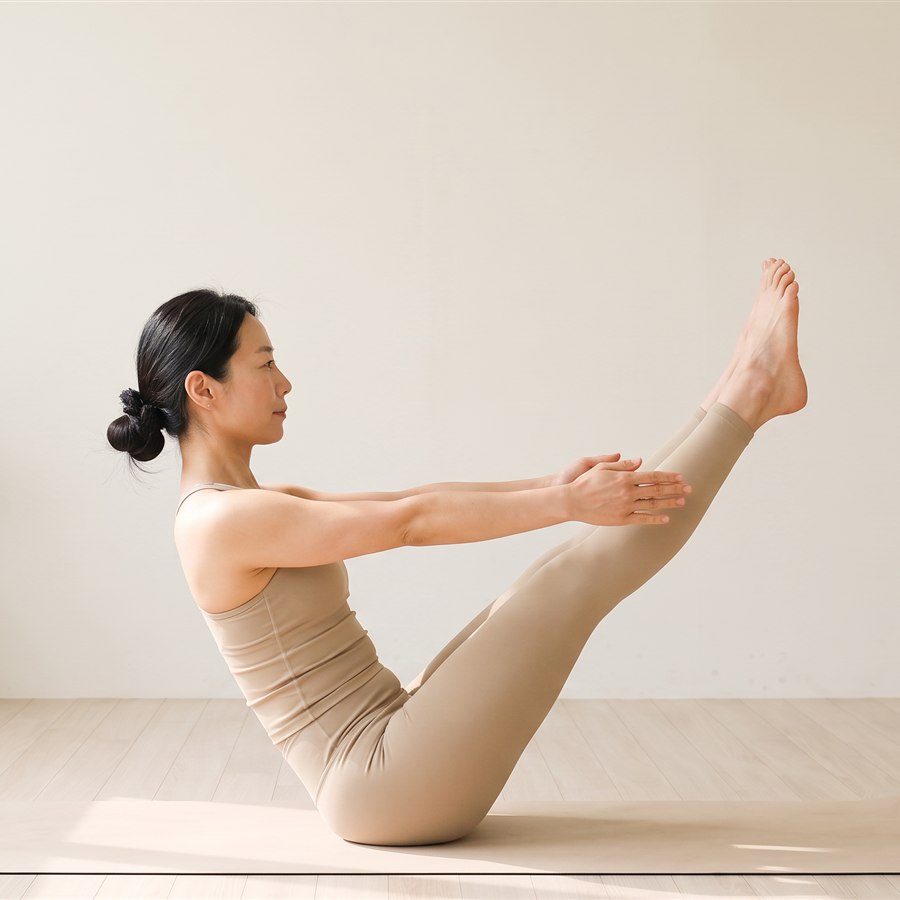
Primary Series · Yoga Chikitsa (Yoga Therapy) — Seated Sequence
Breath: 5×5 · Drishti (gaze): toes
Balance just behind the sitting bones and hold a V of legs and trunk for five breaths, five times, lifting the body between rounds. The moment the back rounds the lumbar takes over, so the lifted chest and long spine are the pose — the classic school of bandha control.
Alignment
- Hands — reaching level beside the knees at shoulder height, palms facing each other
- Feet — together, toes extended to eye level
- Knees — straight is the aim, but bend them before ever rounding the back
- Gaze — the toes, chest lifted, the core (not the belly) doing the holding
Entering the pose
- Begin with the shins parallel to the floor
- Chest lifted, spine long, extend the legs
- Arms level with the floor; five breaths, five rounds
Common mistakes
- The back rounding, straining the lower back
- Tension pooling in the neck and shoulders
Modifications & props
- Bent knees with shins parallel to the floor is this pose's standard starting point — if the back is straight, that is Navasana.
- A stage of supporting the thighs with the hands, guarding against a rounding back, brings straight legs much sooner.
- Between rounds, lifting begins as pressing the hands and unweighting the hips — the bandhas engage even before the feet leave.
Benefits
- Strengthens the deep core and hip flexors
- Builds the strength that keeps the spine tall
- The key pose for learning bandha control
Role in the sequence
Into a torso softened by folds and twists, this pose writes strength. Hold five breaths, lift the body, hold again — five rounds: the only pose in Primary structured as repeated sets. The bandha control and lifting power forged here are the engine of Bhujapidasana just ahead, and of every jump-back and jump-through.
Practice notes
Nava means boat, and the name comes from the shape of a hull afloat. Its structure is unique in the Primary Series: five sets of five breaths, with a lift-up between each. In the middle of the seated sequence, this is the only place that asks for plain strength.
A straight spine matters before leg height. Lifted legs above a rounded lower back make less of a boat than a folded piece of paper, and the hip flexors end up working in place of the abdomen. On a day the back collapses, bending the knees so the shins are parallel to the floor is far more accurate practice — lower the shape and the bandhas come back to life.
The lift-ups between the five sets are half the real training. Even when the hips do not leave the floor, pressing the hands down and drawing the shoulders up wakes the arms and the core together. Two checks: does the breath keep flowing through all five sets, and is the lower belly holding the pose rather than the neck and shoulders? The harder the pose, the sooner the habit of holding the breath appears.
Bent knees with shins level is a full version of the work.
Written by Choi Seongjin — 20 years of Ashtanga practice, currently teaching three classes a week. Last updated: .
This guide is for general information and is not medical advice. If you are pregnant, injured, or have a medical condition, consult a qualified teacher or physician before practising. Disclaimer & Legal Notice
Other poses in this sequence
Ashtanga Shala — Ashtanga Vinyasa Yoga guide · Blog
Policies