Head-to-Knee A–C · Janu Sirsasana A–C
Janu Sirsasana A–C · 자누 시르사사나 · 무릎-머리 자세
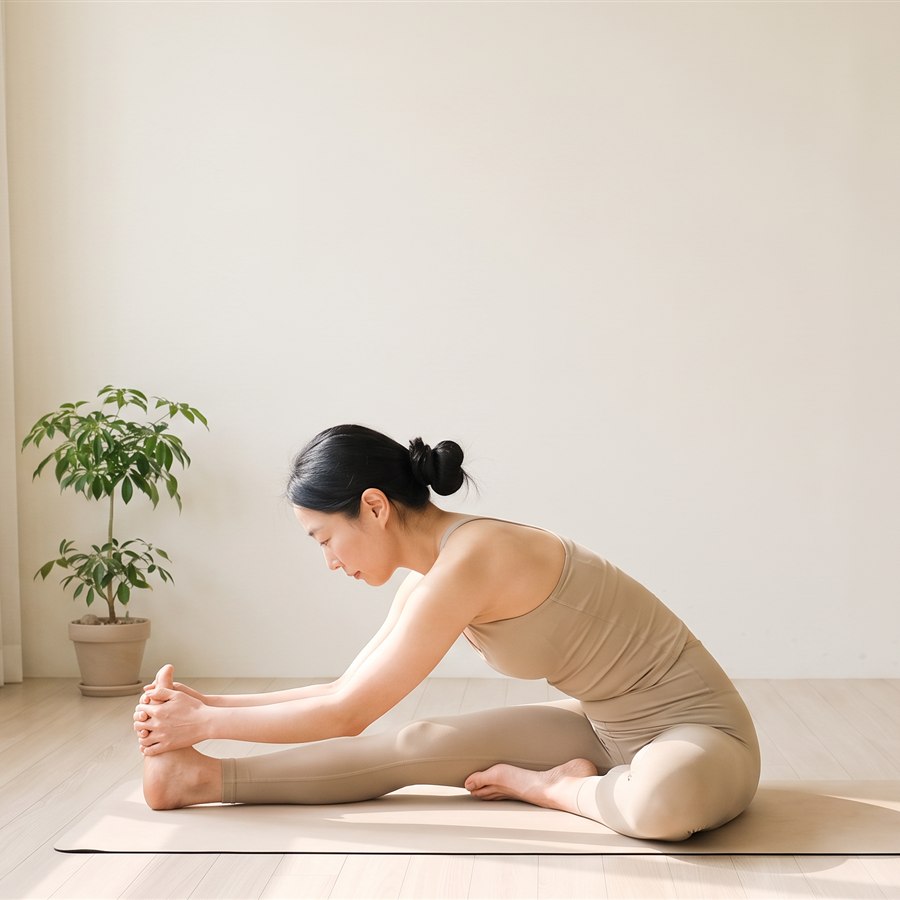
Primary Series · Yoga Chikitsa (Yoga Therapy) — Seated Sequence
Breath: 5×3 · Drishti (gaze): toes
Bend one knee, set the sole against the inner thigh, square the torso over the straight leg, and fold. Three variations (A–C) change the foot and ankle position; the lowered forehead and long exhale turn the attention inward.
Alignment
- Hands — both hands to the extended foot, clasping the wrist beyond the sole when possible
- Feet — the bent sole against the inner thigh (90° in A); the long foot flexed
- Knees — the bent knee opens wide back; the extended leg stays straight
- Gaze — the toes, navel turned to face straight down the extended leg
Entering the pose
- Bend the knee, foot to the inner thigh
- Square the torso over the straight leg
- Exhale, fold and hold the foot
Common mistakes
- The straight leg rolling outward
- Forcing the C ankle through pain
Modifications & props
- Practicing only A on both sides, adding B and C with a teacher, is the traditional way to climb these steps.
- A high floating knee gets a blanket beneath it; a torso tipping toward the long leg gets one under the sit bone.
- When the far foot is out of reach, hold the shin — but first check that the navel faces straight down the extended leg.
Benefits
- An asymmetric stretch of hamstring and back
- The bent-knee hip opens softly
- The lowered forehead turns attention inward
Role in the sequence
The central cluster of the seated folding section. One basic form — knee folded open, torso over the long leg — repeats through A, B, and C, the heel migrating slightly each time to address perineum and ankle in graded steps. Three asymmetric folds in a row, five breaths per side: the most meditative rhythm the seated sequence produces.
Practice notes
Janu (knee) and sirsa (head): the head-to-knee pose. The three variations differ only in where the bent leg's foot sits — A places the sole against the inner thigh with the knee opening toward ninety degrees, B tucks the foot under so you sit above the heel, C stands the toes up and aims the heel toward the navel. Each letter asks more rotation of the hip and ankle.
All three are held five breaths with a jump-back between them, which makes this the first stretch of the seated sequence where stamina is genuinely tested. The fold is not straight ahead but slightly turned toward the extended leg: the navel travels over that thigh first, then the chest, and the forehead arrives last.
C is the variation the knee feels most, so the rule is not to hurry. If the ankle cannot yet make the angle, forcing the heel to the belly twists ankle and knee together. Practising only A and B for months while merely sketching C leaves the sequence whole. Two checks: is the bent knee opening down toward the floor, and does the kneecap of the extended leg still face the ceiling?
Support a floating knee with a blanket; save C for supple ankles.
Written by Choi Seongjin — 20 years of Ashtanga practice, currently teaching three classes a week. Last updated: .
This guide is for general information and is not medical advice. If you are pregnant, injured, or have a medical condition, consult a qualified teacher or physician before practising. Disclaimer & Legal Notice
Other poses in this sequence
Ashtanga Shala — Ashtanga Vinyasa Yoga guide · Blog
Policies