Marichi's Pose A·B (fold) · Marichyasana A·B
Marichyasana A·B · 마리챠사나 A·B · 현인 자세 (전굴)
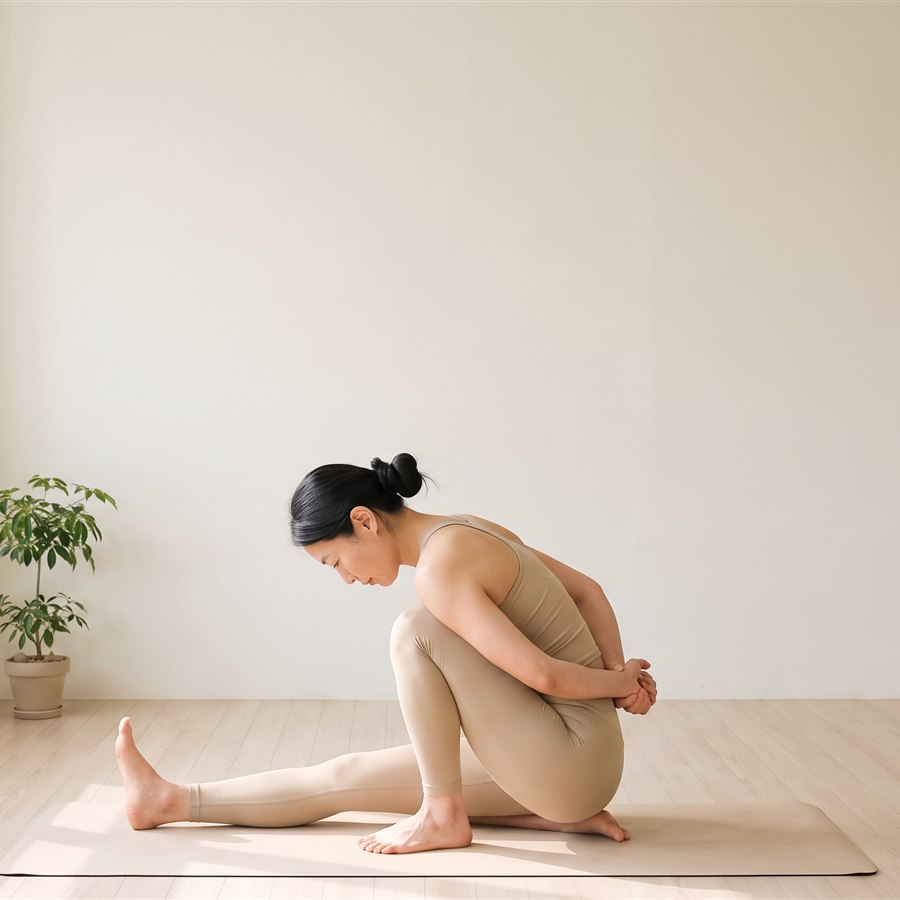
Primary Series · Yoga Chikitsa (Yoga Therapy) — Seated Sequence
Breath: 5×2 · Drishti (gaze): toes
With one knee up and the heel close, wrap the same-side arm around the shin and clasp the other hand behind the back before folding. B repeats the fold with the opposite leg in half lotus — the bind opens the shoulder while the deep fold works the belly.
Alignment
- Hands — the arm wraps the upright shin from inside and clasps the opposite wrist behind the back
- Feet — the standing foot flat just ahead of the sit bone; the long foot flexed (half lotus in B)
- Knees — the upright knee draws toward the armpit, torso and shin sealing together
- Gaze — the toes, the center of the chest lowering toward the shin on the exhale
Entering the pose
- Right knee up, heel close to the hip
- Wrap the shin with the right arm
- Clasp behind the back, exhale, fold
Common mistakes
- Rounding hard just to make the bind
- The standing foot too far away to wrap
Modifications & props
- As the pre-bind stage, hugging the shin and folding rehearses every folding ingredient of this pose.
- When the fingertips barely miss, bridge the bind with a towel held at both ends behind the back.
- If B's half lotus is too much, tuck the foot under the opposite thigh and fold as in A — the sequence stays intact.
Benefits
- The wrap around the shin opens the shoulder joint
- The deep fold strongly stimulates belly and digestion
- Hip and hamstring lengthen together
Role in the sequence
The folding pair of the four poses dedicated to the sage Marichi. Where every fold so far questioned only the leg's back line, Marichyasana introduces the craft of binding — the arm wrapping the shin to clasp behind the back — the key skill of late Primary and of the Intermediate series. A folds over a straight leg, B over a half lotus, raising the bind's difficulty one notch at a time.
Practice notes
Marichi is a sage, said to be a son of Brahma and grandfather of the sun. Ashtanga hangs four poses on that name, A through D: the first two fold, the last two twist. In A one knee stands while the same-side arm wraps it and the hands clasp behind the back before folding; in B the other leg is in lotus while you do the same thing.
The principle of the bind is single: only after the standing shin is pushed deep into the armpit does the arm have enough length to wrap the leg. Reaching for the hand while the shoulder still rests on top of the shin will never work, whatever your arm length. So the first movement of this pose belongs to the torso, not the arm, and a strap between the hands saves months when the clasp is out of reach.
B is harder because you fold forward while sitting on a lotus. If the lotus knee floats above the floor, folding twists the inner knee, so while that knee still lifts, simply sit with the leg crossed instead. Two checks: is the whole sole of the standing foot in contact with the floor, and after binding, have the shoulders shot up beside the ears?
Use a strap, or simply hug the knee.
Written by Choi Seongjin — 20 years of Ashtanga practice, currently teaching three classes a week. Last updated: .
This guide is for general information and is not medical advice. If you are pregnant, injured, or have a medical condition, consult a qualified teacher or physician before practising. Disclaimer & Legal Notice
Other poses in this sequence
Ashtanga Shala — Ashtanga Vinyasa Yoga guide · Blog
Policies