Extended Side Angle · Utthita Parsvakonasana
Utthita Parsvakonasana · 웃티타 파르스바코나사나 · 측면각
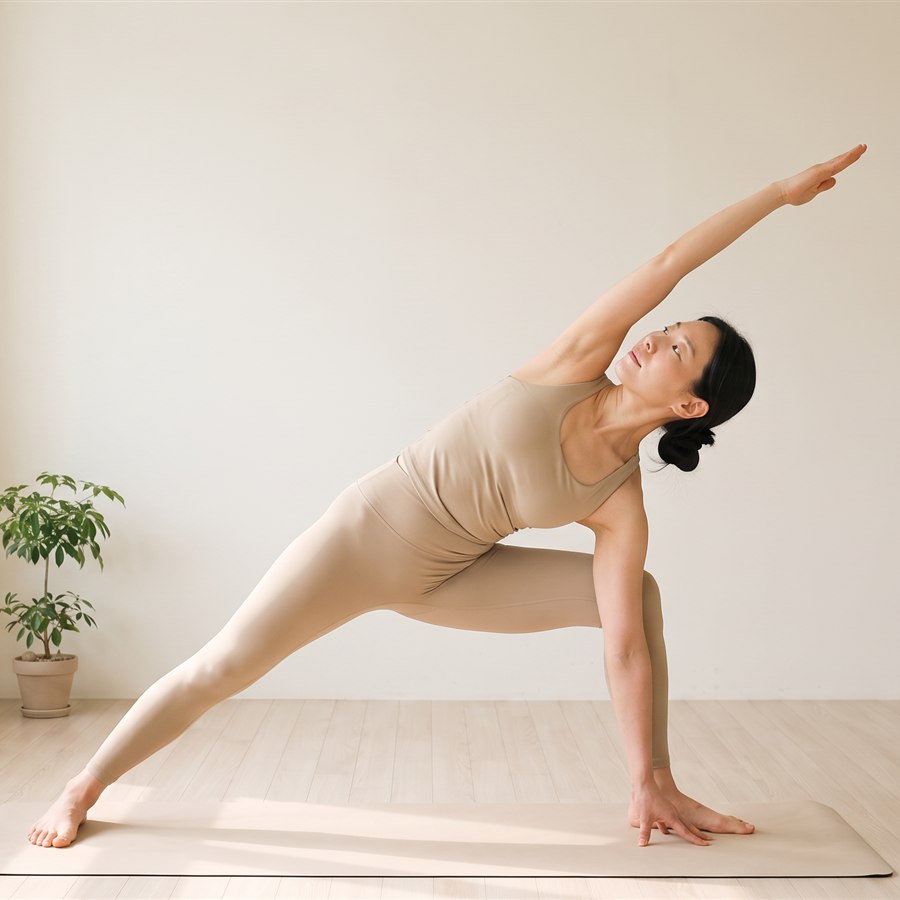
Primary Series · Yoga Chikitsa (Yoga Therapy) — Standing Sequence
Breath: 5 · Drishti (gaze): top hand
Bend the front knee to a right angle, take the hand to the floor outside the foot, and sweep the top arm over the ear. Pressing the back foot's edge down completes one unbroken diagonal from foot edge to fingertips; revolve the chest skyward and breathe along that line.
Alignment
- Hands — the lower palm planted outside the front foot, the top arm sweeping past the ear on a diagonal
- Feet — the entire back-foot edge presses down, completing one line from foot edge to fingertips
- Knees — front knee at a right angle directly over the ankle, neither caving in nor rolling out
- Gaze — under the top armpit, up to the reaching fingertips
Entering the pose
- Wide stance, front foot 90°
- Exhale, bend the knee to a right angle
- Hand to the floor outside the foot
- Top arm over the ear
Common mistakes
- The knee collapsing inward
- The chest turning down toward the floor
- The back leg bending, breaking the line
Modifications & props
- Even with the elbow resting on the thigh, sweeping the top arm past the ear completes the diagonal — the hand reaching the floor comes later.
- If the front knee won't reach ninety degrees, bend it less and guard only that it stays over the ankle.
- When the lower hand barely grazes the floor, a block inside the foot keeps the chest from closing.
Benefits
- Extends the entire side line from foot edge to fingertips
- The bent front leg strengthens thigh and hip
- Opens the intercostal spaces for a deeper breath
Role in the sequence
Trikonasana with the front leg bent and loaded — the first place in the standing sequence where the thighs do serious work. The sensation of one diagonal line from foot edge to fingertips is reused wholesale in the Virabhadrasanas, and opening the chest over a bent leg is homework for the deep lunge family of the Intermediate series.
Practice notes
Utthita is extended, parsva is side, kona is angle: the angle made by an extended flank. What the name points at is not the bent knee but the single long diagonal running from the outer edge of the back foot to the top fingertips. That line usually breaks at the waist, which makes this a pose about keeping the torso long rather than about leg strength.
The count is the same five steps as the triangle family: inhale to step wide, exhale to bend the knee to ninety degrees, inhale to lengthen the spine, exhale into the five-breath hold. Through those breaths the front thigh should stay parallel to the floor, and the moment the breath gets ragged the knee quietly starts to straighten. When the thigh begins to shake, that is the pose actually doing its work.
After a year you notice the hard part is not putting the lower hand on the floor outside the foot but refusing to lean any weight into it. Two self-checks: is the outer edge of the back foot still pinned to the mat, and is the chest rolling open toward the ceiling instead of collapsing toward the floor? The bottom hand is a place to touch, not a place to rest.
Resting the elbow on the thigh is plenty.
Written by Choi Seongjin — 20 years of Ashtanga practice, currently teaching three classes a week. Last updated: .
This guide is for general information and is not medical advice. If you are pregnant, injured, or have a medical condition, consult a qualified teacher or physician before practising. Disclaimer & Legal Notice
Lessons on this posture
Other poses in this sequence
Ashtanga Shala — Ashtanga Vinyasa Yoga guide · Blog
Policies