Pyramid Pose · Parsvottanasana
Parsvottanasana · 파르스보타나사나 · 측면 전굴
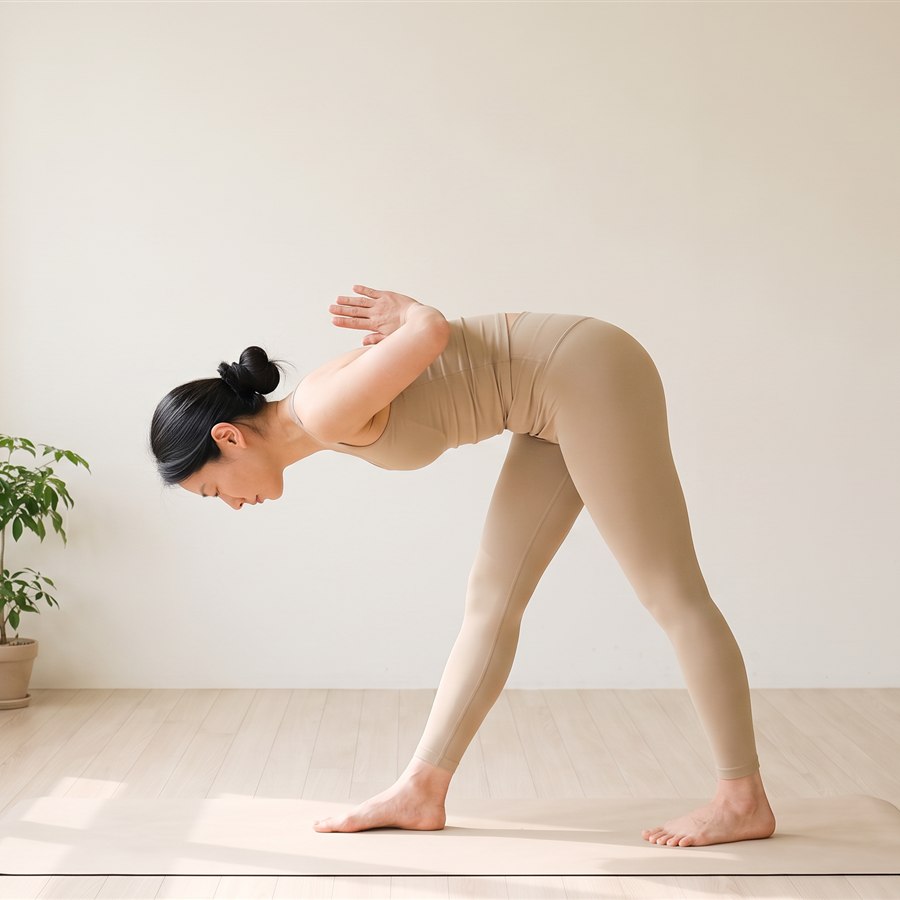
Primary Series · Yoga Chikitsa (Yoga Therapy) — Standing Sequence
Breath: 5 · Drishti (gaze): nose tip
Join the palms in reverse prayer between the shoulder blades, square the hips over a short stance, and fold over the front leg. Inhale to open the chest long, exhale to lay the belly toward the thigh — hamstrings, wrists, and shoulders opening in one asymmetric fold.
Alignment
- Hands — palms joined behind the back in reverse prayer, little-finger edges climbing the spine
- Feet — front foot straight ahead, back foot at 45°, both hip points squared forward
- Knees — both legs straight without locking the front knee
- Gaze — the toes; the belly reaches the thigh before the chin does
Entering the pose
- Reverse prayer (or hold the elbows) behind the back
- Step the feet apart, hips square
- Inhale open the chest, exhale fold over the front leg
Common mistakes
- Folding with the pelvis twisted sideways
- Rounding the spine to force chin to shin
Modifications & props
- When reverse prayer is far away, fold the arms behind the back — or simply rest the hands on the waist and learn the fold first.
- A floating back heel means the stance is too long; keeping the stance at the cost of a turned pelvis reverses the priorities.
- The forehead need not reach the shin. What is checked each time is only the order of descent: belly, chest, then head.
Benefits
- A deep asymmetric stretch for hamstrings and hips
- Reverse prayer opens wrists, shoulders, and chest
- Teaches the feel of a squared pelvis
Role in the sequence
From the wide stance of Prasarita, the feet return to a short, asymmetric base to learn folding over a squared pelvis. The reverse prayer behind the back is the standing sequence's last and deepest demand on wrists and shoulders. Its core rule — pelvis fixed, torso traveling alone — is put on trial immediately in the one-legged balances that follow.
Practice notes
The name joins parsva (side) and uttana (intense stretch): an intense stretch toward the side. English calls it Pyramid because the legs and floor make a triangle in profile, and that nickname is the trap — throwing the chest forward to build the triangle drags the back hip along with it and destroys the squareness of the pelvis.
What makes this pose distinctive is the reverse prayer behind the back. Pressing the palms together behind you and turning the fingertips upward opens shoulders and wrists at once, and on a day it will not happen, holding opposite elbows does the same job. The count is: inhale to square the hips and set the hands behind the back, exhale to fold, then five breaths.
After a year, check two things. Is the back foot held at forty-five degrees with its heel still down, and are both hip points facing forward at the same height? Letting the back hip slide away produces a much deeper-looking fold while the front hamstring — the whole point of the shape — quietly rests. Shallow and square always beats deep and crooked.
Hold opposite elbows if reverse prayer is far.
Written by Choi Seongjin — 20 years of Ashtanga practice, currently teaching three classes a week. Last updated: .
This guide is for general information and is not medical advice. If you are pregnant, injured, or have a medical condition, consult a qualified teacher or physician before practising. Disclaimer & Legal Notice
Lessons on this posture
Other poses in this sequence
Ashtanga Shala — Ashtanga Vinyasa Yoga guide · Blog
Policies