Chair Pose · Utkatasana
Utkatasana · 웃카타사나 · 의자 자세
Primary Series · Yoga Chikitsa (Yoga Therapy) — Standing Sequence
Breath: 5 · Drishti (gaze): thumbs
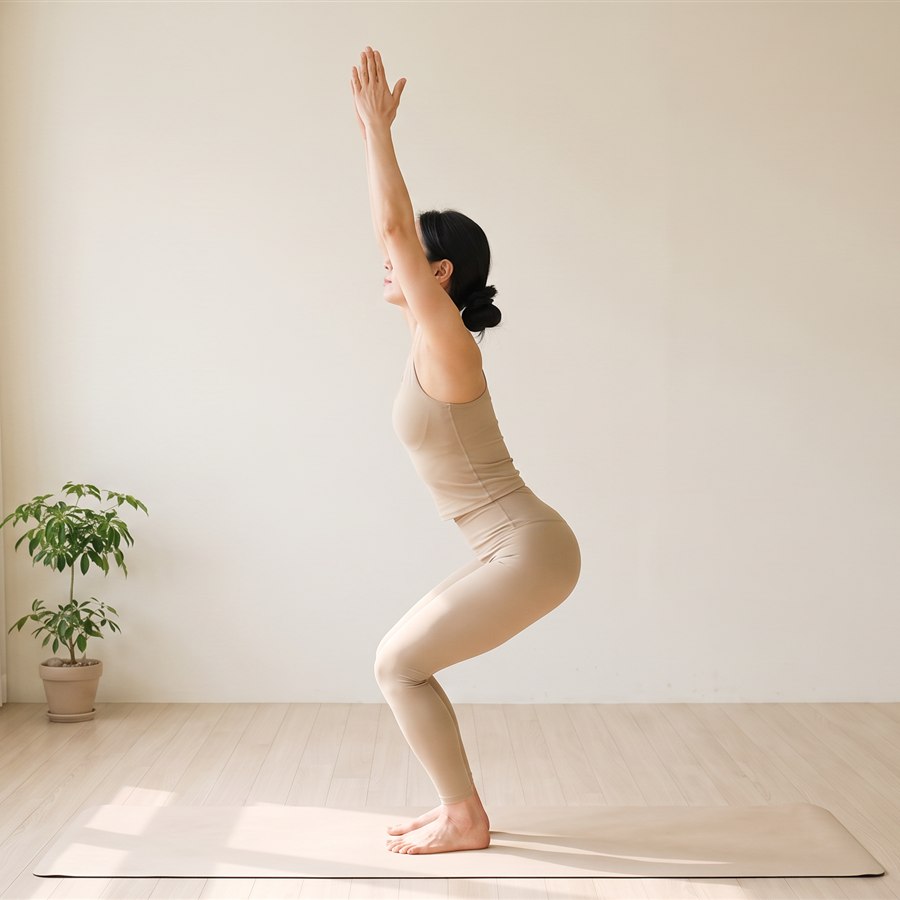
Feet together, bend the knees deeply as if sitting into an unseen chair while the arms extend overhead, palms joined, gaze to the thumbs. Weight in the heels and a gently dropped tailbone protect the low back as the thighs begin to build the practice's heat.
Alignment
- Hands — palms joined overhead, elbows straight, upper arms framing the ears
- Feet — big toes and heels together, weight settled into the heels
- Knees — deeply bent but never traveling past the toes
- Gaze — up to the thumbs (angusta ma dyai)
Entering the pose
- Feet together, inhale the arms up
- Exhale, sit down as into a chair
- Tuck the tailbone slightly to protect the low back
Common mistakes
- Ribs flaring with an over-arched lower back
- Knees traveling far past the toes
Modifications & props
- If reaching overhead is hard, keep the palms joined at the chest and let only the legs work — the shoulders can join later.
- A pinching lower back means sit less deep; depth extends only to where the waist stays long.
- When the heels feel unsteady, a fist-width between the feet is a small and honest departure from tradition.
Benefits
- Strengthens thighs, glutes, and ankles
- Raises the heart rate, building the practice's heat
- The reaching arms work shoulders and upper back
Role in the sequence
A shape already glimpsed inside Surya Namaskara B earns its own five-breath seat here. The standing sequence's flow of lengthening and folding shifts for the first time into holding and working, and the heat and heart rate raised here carry through both Virabhadrasanas and into the vinyasa that crosses over to the seated poses.
Practice notes
Utkata means fierce or intense, which is far more honest than the common nickname chair pose — this is not pretend-sitting but a posture of held fire. It opens Surya Namaskara B, so an Ashtanga practitioner has already risen and sunk through this shape five or more times each morning before meeting its formal five-breath hold in the standing sequence.
In the vinyasa you inhale straight from the forward fold, bending the knees and sweeping the arms up into the shape in one motion; after five breaths the hands plant, the whole body lifts into a balance, and you jump back — an exit ranked among Ashtanga's trickiest transitions. The real examination during the five counts is whether the burn in the thighs and an even breath can coexist.
With long practice, three micro-adjustments become automatic: weight into the heels, tailbone down, ribs drawn in. To self-check, try lifting your toes off the floor — if they won't rise, the weight has drifted forward. Depth of the sit is a later concern; this one test protects the knees for years.
Knees behind the toes, weight in the heels.
Written by Choi Seongjin — 20 years of Ashtanga practice, currently teaching three classes a week. Last updated: .
This guide is for general information and is not medical advice. If you are pregnant, injured, or have a medical condition, consult a qualified teacher or physician before practising. Disclaimer & Legal Notice
Lessons on this posture
Other poses in this sequence
Ashtanga Shala — Ashtanga Vinyasa Yoga guide · Blog
Policies