Big Toe Pose · Padangusthasana
Padangusthasana · 파당구쉬타사나 · 엄지발가락 잡기
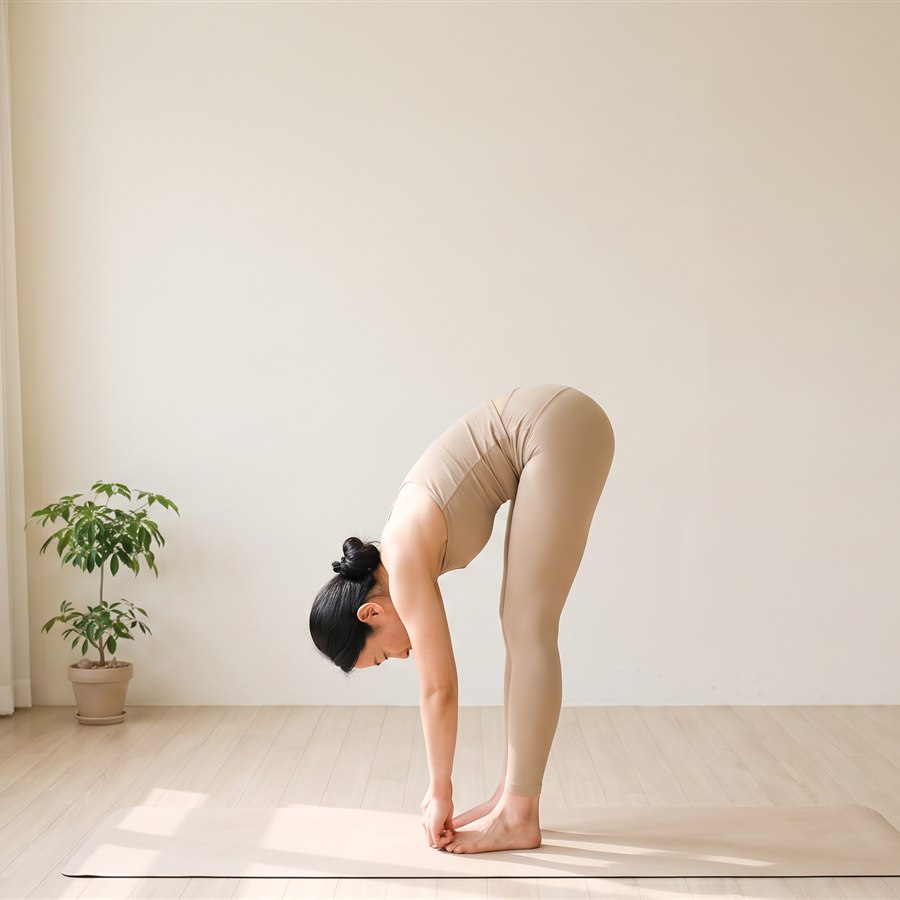
Primary Series · Yoga Chikitsa (Yoga Therapy) — Standing Sequence
Breath: 5 · Drishti (gaze): nose tip
Fold from the hips with feet hip-width apart and hook the big toes with the first two fingers. Inhale to lengthen the spine, exhale to deepen as the elbows bend wide, letting the weight drift toward the front of the feet so the whole back line of the legs lengthens.
Alignment
- Hands — hook the big toes with the index and middle fingers, thumb on top, elbows bending wide to the sides
- Feet — hip-width and parallel, weight shifting slightly toward the balls of the feet
- Knees — straight but never locked back; lift the front thighs instead
- Gaze — the tip of the nose, neck soft, crown releasing toward the floor
Entering the pose
- Feet hip-width, hands on the waist
- Inhale, lengthen the spine
- Exhale, fold and hook the big toes
- Inhale look up and lengthen, exhale fold deeper
Common mistakes
- Rounding the back and only dropping the head
- Locking the knees hard backward
- Shoulders creeping toward the ears
Modifications & props
- On a stiff day, hold the ankles or shins instead of the toes and keep only the wide-elbow action.
- If the floor is far away, stand two blocks in front of the feet — folding onto them trains the same direction.
- For a sensitive lower back, keep the knees bent with belly on thighs, letting the legs straighten breath by breath.
Benefits
- Deeply lengthens the hamstrings and the whole back line of the legs
- With the head below the heart, the nervous system settles
- Gently compresses the abdomen, aiding digestion
Role in the sequence
The standing sequence opens here, right after the Sun Salutations have warmed the body. As the first forward fold of the day, what the hamstrings tell you in this shape is an honest reading of today's condition. The folding action learned here flows straight into Padahastasana and sketches the blueprint for every Paschimottanasana-family fold in the seated sequence.
Practice notes
The name is simply pada (foot) plus angustha (big toe) — the big-toe posture. From the very first pose, Ashtanga's habit of using the body to hold the body appears: a light resistance forms between hooked fingers and toes, creating a traction no passive hang can produce. The toes press the fingers down while the fingers pull the toes up — opposing forces that are this pose's hidden mechanism.
Inside the vinyasa count, you inhale from Samasthiti to step the feet apart with hands on the waist (ekam), exhale to fold and hook the toes (dve), inhale to lift the head and lengthen (trini), and exhale into the five-breath hold. During those five, forcing a deeper fold gains little; letting the torso sink a fraction at the end of each exhale carries you much further.
After a few months, this pose becomes a thermometer for the day's body. Same movement as yesterday, different depth at the fingertips — that usually means poor sleep, a cold body, or a hurried mind. Check only two things yourself: whether the neck hangs free, and whether the shoulders stay far from the ears. The breath handles the rest.
Bend the knees slightly, or hold the shins instead.
Written by Choi Seongjin — 20 years of Ashtanga practice, currently teaching three classes a week. Last updated: .
This guide is for general information and is not medical advice. If you are pregnant, injured, or have a medical condition, consult a qualified teacher or physician before practising. Disclaimer & Legal Notice
Lessons on this posture
Other poses in this sequence
Ashtanga Shala — Ashtanga Vinyasa Yoga guide · Blog
Policies