Revolved Side Angle · Parivrtta Parsvakonasana
Parivrtta Parsvakonasana · 파리브르타 파르스바코나사나 · 회전 측면각
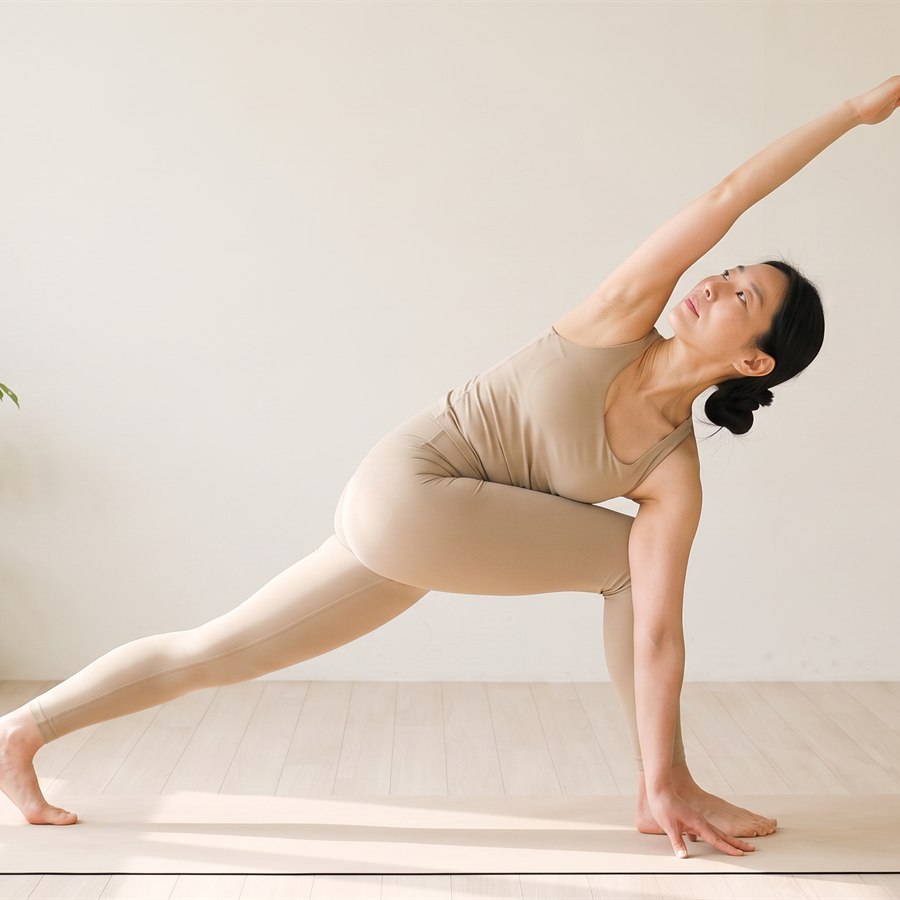
Primary Series · Yoga Chikitsa (Yoga Therapy) — Standing Sequence
Breath: 5 · Drishti (gaze): top hand
Over lunging legs, twist deeply to hook the opposite elbow outside the front knee, the joined palms working as a lever to spiral the chest open. Inhale to lengthen, exhale to revolve from the low belly — the whole spine winds upward over a strong base.
Alignment
- Hands — palms pressed together, the opposite elbow hooked firmly outside the front knee as a lever
- Feet — back heel lifted and driving (grounded in the full pose); beginners may lower the back knee
- Knees — the front right angle held steady through the whole twist
- Gaze — past the upper elbow to the sky, revolving a little more on each exhale
Entering the pose
- Start from warrior-one legs
- Exhale, hook the elbow outside the knee
- Press the palms, turn the chest skyward
- Optionally take the lower hand to the floor
Common mistakes
- The front knee wobbling as you twist
- Holding the breath and forcing the twist
Modifications & props
- Starting with the back knee down in a lunge is the classical entry — with balance taken care of, all attention goes to the rotation.
- Before hooking the elbow outside the knee, spend real time with palms joined at the chest, turning the torso alone.
- The back heel may stay lifted; grounding it belongs to a later stage, once the ankle's flexibility arrives.
Benefits
- A deep twist over strong legs builds spinal mobility
- Stimulates the abdominal organs and digestion
- Sharpens balance and focus together
Role in the sequence
Often called the hardest gate of the standing sequence. It stacks the rotation of Parivrtta Trikonasana onto the bent-leg base of Parsvakonasana, combining for the first time two ingredients learned separately. When this pose becomes comfortable, the road to Marichyasana C·D and to Pasasana — the first pose of Intermediate — is already half paved.
Practice notes
The name reverses the previous pose exactly: the extended side angle, revolved. It is the hardest twist in the standing sequence, and the reason is that it asks for rotation, balance, and leg strength in the same moment. Chase one and the other two collapse — twist deeply and the back heel lifts; protect the heel and the arm will not cross the knee.
There is an order to the five breaths as well. Bring the palms together at the chest, hook the elbow outside the knee, use that lever to draw the spine long, and only then rotate. Dropping the hand straight to the floor freezes the rotation into a rounded back. Increasing the mutual pressure between elbow and knee a little on each exhale is the safe way forward.
The back heel is a long homework assignment. Even the reference photographs in well-known yoga magazines show the lifted-heel variation, so months of practice with the heel up is nothing to hurry. Watch two other things instead: whether the front knee tracks over the second toe rather than caving inward, and whether the lower belly is engaged so the twist begins at the ribs rather than the lower back.
Lower the back knee to the floor to begin.
Written by Choi Seongjin — 20 years of Ashtanga practice, currently teaching three classes a week. Last updated: .
This guide is for general information and is not medical advice. If you are pregnant, injured, or have a medical condition, consult a qualified teacher or physician before practising. Disclaimer & Legal Notice
Lessons on this posture
Other poses in this sequence
Ashtanga Shala — Ashtanga Vinyasa Yoga guide · Blog
Policies