Hand Under Foot Pose · Padahastasana
Padahastasana · 파다하스타사나 · 손 위에 서기
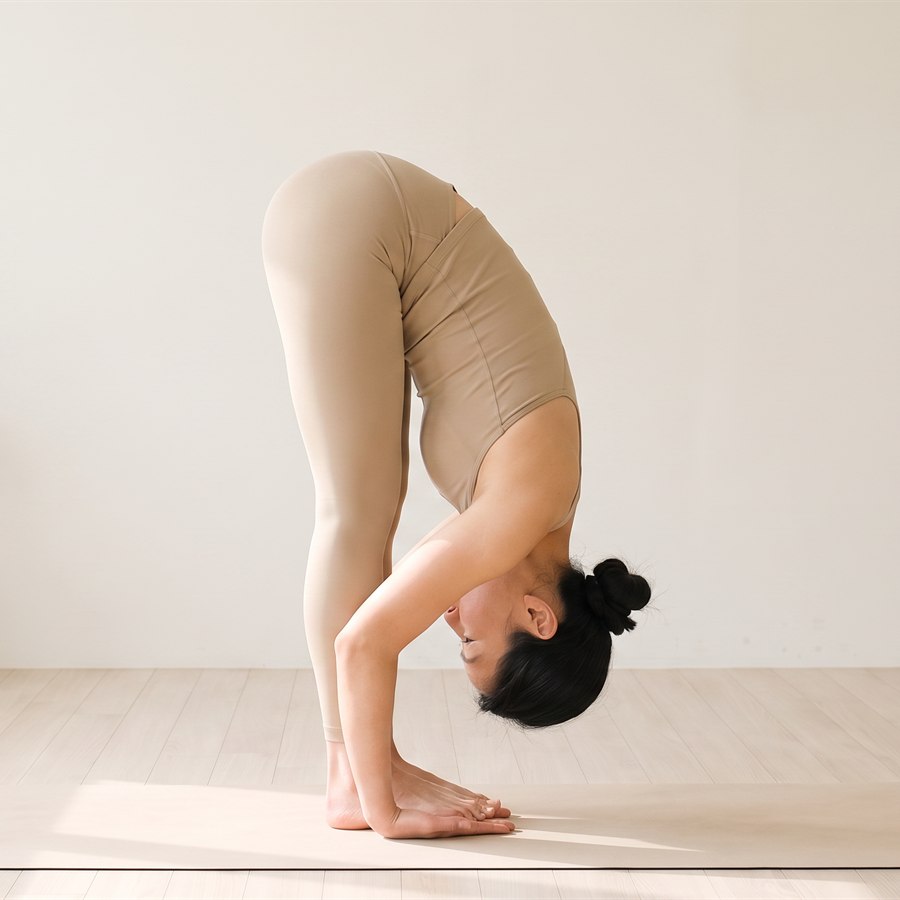
Primary Series · Yoga Chikitsa (Yoga Therapy) — Standing Sequence
Breath: 5 · Drishti (gaze): nose tip
Bend the knees softly, slide the palms face-up beneath the soles until the toes reach the wrist creases, then fold. The deepest wrist stretch of the standing poses — each exhale bends the elbows and draws the torso closer to the legs.
Alignment
- Hands — slide the palms face-up fully under the soles until the toes meet the wrist creases
- Feet — stay hip-width, the whole sole pressing gently down on the palms
- Knees — bent while the hands slide under, then straightening slowly on an exhale
- Gaze — the nose tip; forehead and jaw soft, the head hanging by its own weight
Entering the pose
- Bend the knees within the fold
- Slide the palms under, facing up
- Toes to the wrists, then fold
Common mistakes
- Forcing the hands under with straight knees
- Weight falling back into the heels
Modifications & props
- If the hands won't slide fully under, standing on just the fingertips of the toes still gives the wrists their stretch.
- Bend the knees generously to place the hands, then regulate depth by how far the legs straighten — safer than adjusting the grip.
- On a day of wrist pain, skip this pose and repeat Padangusthasana instead; the flow is not broken.
Benefits
- Stretches the inner wrists — an antidote to keyboard work
- Releases the hamstrings and spinal erectors
- The held fold sends blood to the head, clearing the mind
Role in the sequence
The twin that follows Padangusthasana without a single breath between them. Only the grip changes — from toes to under the soles — yet that small shift deepens the fold one degree further and invites a new joint, the wrist, into the practice. It pre-stretches in reverse exactly what Chaturanga and the arm balances to come will ask the wrists to bear.
Practice notes
The name simply joins pada (foot) and hasta (hand): hand under foot. The Sanskrit is the instruction. Turning the palms up and standing on them gives the wrists their first lengthening of the day in the opposite direction. Chaturanga and every jump-back load the wrists one way only, so opening them the other way here is what lets you keep using them for years.
In the count you inhale to lift the head out of Padangusthasana and exhale to release the toes and slide the hands, palms up, beneath the feet. The point is that you never stand up between the two poses — the legs stay folded and only the grip changes, so the warmth built in the first shape is not lost. Bending the knees generously to place the hands and straightening them across the five breaths is the kindest order for the lower back.
After a few months you stop measuring this pose by whether the hands slide in and start measuring where the toes land on the wrist creases. Two things to check for yourself: whether the weight has drifted back into the heels or stayed over the balls of the feet, and whether the elbows fold backwards rather than flaring out. With those two right, the fold is working even on a day the back stays round.
Just holding the tops of the feet is fine.
Written by Choi Seongjin — 20 years of Ashtanga practice, currently teaching three classes a week. Last updated: .
This guide is for general information and is not medical advice. If you are pregnant, injured, or have a medical condition, consult a qualified teacher or physician before practising. Disclaimer & Legal Notice
Lessons on this posture
Other poses in this sequence
Ashtanga Shala — Ashtanga Vinyasa Yoga guide · Blog
Policies