Bound Lotus · Lotus · Baddha Padmasana · Padmasana
Baddha Padmasana · Padmasana · 받다 파드마사나 · 연꽃 자세
Primary Series · Yoga Chikitsa (Yoga Therapy) — Finishing Sequence
Breath: 10×2 · Drishti (gaze): nose tip
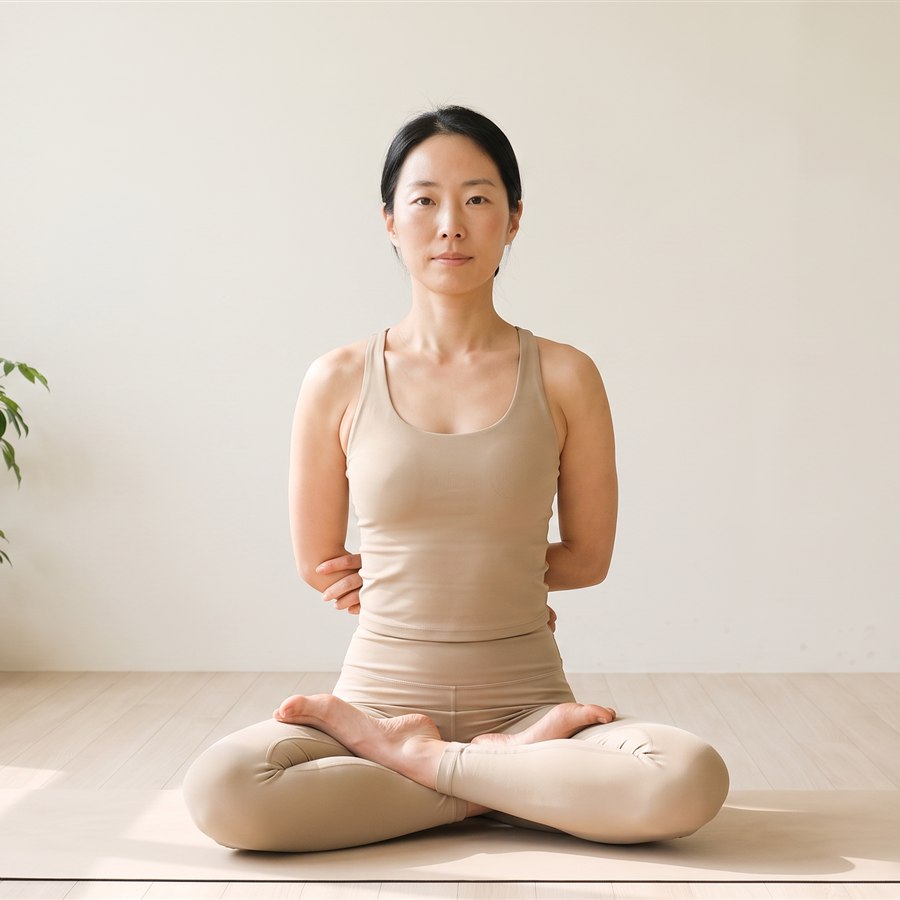
Sit in lotus, cross the arms behind the back to hold both feet, and fold into yoga mudra on the exhale. Then sit tall, hands on knees, and stay in long, even breathing — padmasana holding the essence of the practice.
Alignment
- Hands — arms crossed behind the back, each hand catching the opposite lotus toes (chin mudra on the knees in Padmasana)
- Feet — insteps riding high on both thighs
- Knees — releasing toward the floor from the hips
- Gaze — the nose tip, chin lowered to lengthen the neck
Entering the pose
- Right foot up, rotating from the hip
- Left foot up to complete the lotus
- Cross-bind behind, fold forward
Common mistakes
- Pressing the knees down by force
- Enduring a collapsed, painful ankle
Modifications & props
- Holding opposite elbows behind the back teaches the arms' crossing direction well enough before the bind.
- Sitting is the purpose — half lotus or an easy cross-legged seat is the right answer whenever the spine stands tall.
- One blanket under the hips lowers the knees — the oldest prop of the seated meditation posture.
Benefits
- Deep hip opening builds an unshakable seat
- The stable base for long breathing and meditation
- The yoga mudra fold stimulates the abdominal organs
Role in the sequence
The first two of the three seated closures that end the finishing sequence. Baddha Padmasana — arms crossed behind, each hand to its foot — folds into yoga mudra; then Padmasana, hands on knees, rests in long, even breathing. The traditional account is that the entire day's practice was preparation for this quiet sitting — the point where asana converges into the posture of meditation.
Practice notes
Baddha Padmasana is the bound lotus; Padmasana is simply the lotus. In the first, the arms cross behind the back from a lotus so each hand catches the opposite big toe and the torso folds; in the second the bind is released, the hands rest on the knees, and you sit upright. The whole practice returns here to sitting.
Ten breaths in the bound lotus, ten more in the lotus. Ashtanga's two longest holds stand side by side at this point, and here the business of making shapes with the body finishes and only sitting remains. The closing mantra, when it is chanted, is chanted on this lotus.
If the bind will not happen, hold opposite elbows behind the back instead; if the lotus will not happen, sit in half lotus or simply cross-legged. What matters here is not the shape of the legs but keeping the spine standing by itself for the length of ten breaths.
Two checks: are both knees at the same height rather than one floating far higher, and when the chin draws in and the gaze falls to the nose tip, does the back of the neck lengthen? If a knee hurts, unfold the legs immediately. There are few sadder ways to get injured than in the final poses of the practice.
Half lotus or easy cross-legs substitute; knee pain is a signal.
Written by Choi Seongjin — 20 years of Ashtanga practice, currently teaching three classes a week. Last updated: .
This guide is for general information and is not medical advice. If you are pregnant, injured, or have a medical condition, consult a qualified teacher or physician before practising. Disclaimer & Legal Notice
Other poses in this sequence
Ashtanga Shala — Ashtanga Vinyasa Yoga guide · Blog
Policies